
NEW ISSUES / MODERN U.S. COINAGE
2026 Trump Dollar Arrives, but the July 4th Privy Is the Coin We’re Watching
Only 250,000 special July 4th examples were struck, and they’re being randomly scattered among U.S. Mint rolls and bags. For collectors, the hunt may prove more interesting than the politics.
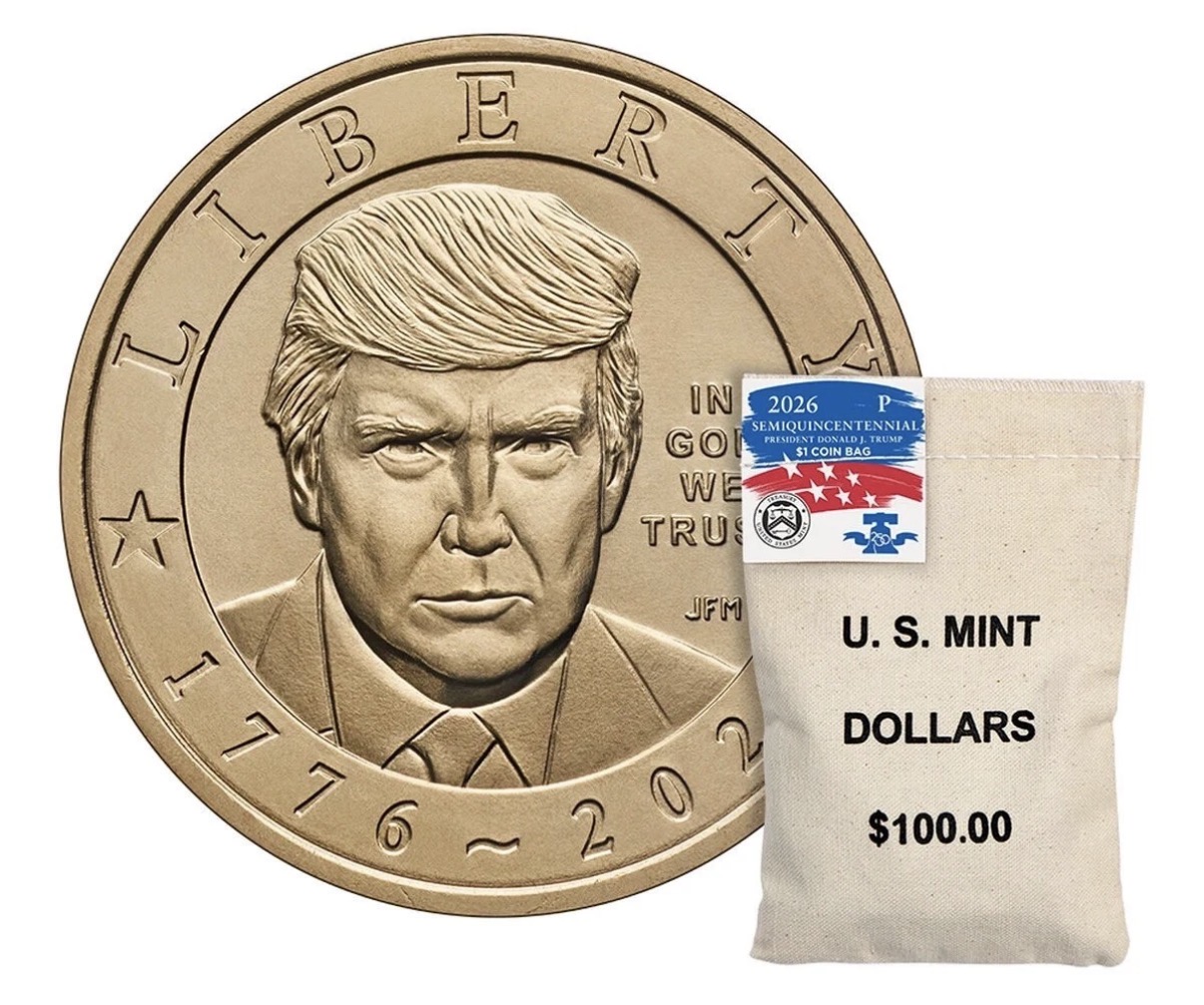
The United States Mint has officially released its 2026 Semiquincentennial President Donald J. Trump $1 coin, adding one of the more unusual issues to an already historic year for American coinage.
Much of the national conversation surrounding the dollar has centered on politics. Criterion’s position is explicitly non-political and numismatic. We’re interested in the coin.
More specifically, we’re watching for a very small mark.
Among the 2026 Trump dollars produced at the Philadelphia Mint are 250,000 coins struck on July 4th, 2026, bearing a special “July 4th” privy mark commemorating the 250th anniversary of American independence. The Mint’s release announcement confirms the mintage and striking date.
The Mint isn’t selling those coins separately. Instead, the July 4th pieces have been randomly interspersed throughout the Mint’s 25-coin rolls and 100-coin bags. That transforms what might otherwise have been a straightforward modern Mint release into something much more interesting for collectors: a hunt. A roll or bag purchase does not guarantee a privy coin.
250,000 Coins with a Story
Mintage alone doesn’t determine collectibility, but the circumstances of production matter.
These particular coins weren’t simply produced sometime during America’s Semiquincentennial year. They were physically struck at the Philadelphia Mint on July 4th, 2026, exactly 250 years after the date associated with the adoption of the Declaration of Independence.
That gives the privy-marked issue something numismatists tend to appreciate: a direct connection between the object and the moment it commemorates.
The Mint has experimented with similar concepts elsewhere in its 2026 program, including 250,000 Declaration of Independence quarters carrying a July 4th privy mark. Those quarters were intended for circulation rather than a separate collector product, creating what the Mint described as a nationwide coin hunt.
The Trump dollar takes a related approach, but with its special coins hidden inside Mint rolls and bags.
You don’t select the privy version at checkout. You find it.
The Regular Coin Is Interesting Too
Even without the privy mark, the dollar is unmistakably a product of 2026.
Chief Engraver Joseph Menna designed the obverse around a portrait of President Trump inspired by an official White House photograph. Surrounding it are LIBERTY, IN GOD WE TRUST, and the dual date 1776 ~ 2026.
The reverse features the Presidential Seal, with 250 placed prominently on the eagle’s shield in recognition of the nation’s Semiquincentennial.
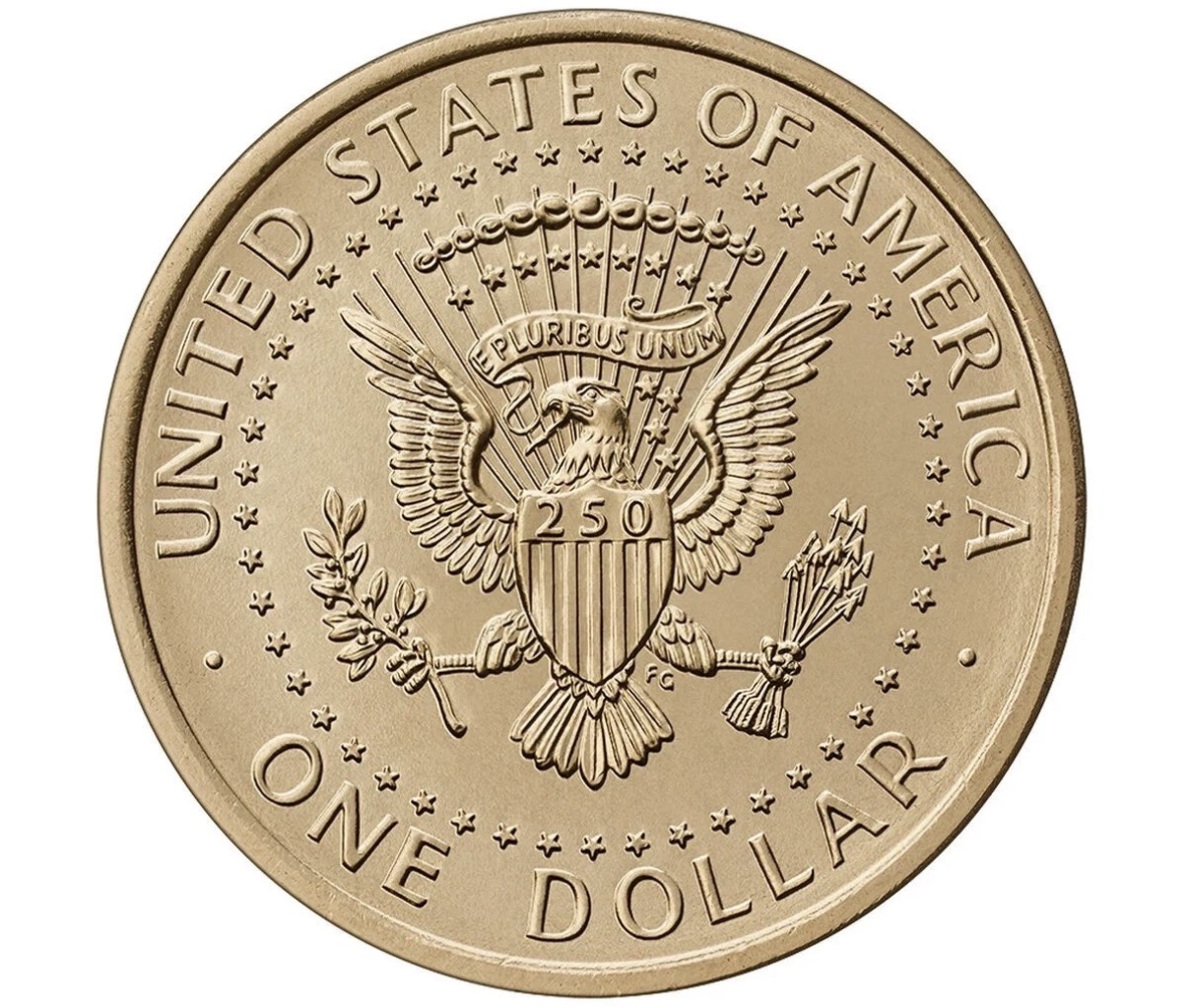
The Philadelphia-struck coin has a circulating finish and the familiar manganese-brass composition associated with modern U.S. golden dollars. It weighs 8.10 grams and measures 26.49 mm in diameter, according to the Mint’s product specifications.
But from a collector’s standpoint, the standard issue and the July 4th issue are two very different propositions.
What Criterion Will Be Looking For
We’re particularly interested in seeing how the July 4th coins emerge from Mint packaging.
Because these are circulating-finish pieces rather than individually handled numismatic strikes, finding a privy-marked example is only the beginning. Surface preservation, contact marks, strike quality, luster and eye appeal will separate ordinary survivors from exceptional ones.
That’s where this release becomes especially interesting from a grading perspective.
There may be 250,000 July 4th coins, but there certainly won’t be 250,000 identical coins.
As rolls and bags are opened, we’ll start learning what the realistic condition distribution looks like and whether truly premium examples are difficult to locate. Population data, market activity and actual collector demand will eventually tell us far more than speculation can today.
Criterion isn’t assigning investment predictions to a coin simply because its mintage is limited. Scarcity, condition rarity and market demand are different things, and they should be evaluated separately.
But as a piece of modern American numismatic history? The July 4th privy has our attention.
In fact, we’re hoping to uncover one or two ourselves.
Criterion is preparing for its first official certified coins, and there would be something particularly fitting about placing a July 4th, 2026 Semiquincentennial dollar among those early holders: a coin struck on the nation’s 250th birthday becoming part of the opening chapter of Criterion.
First, of course, we have to find one. And that’s half the fun.
The Evidence Behind the Grade.